About Us
In 1992, the Ontario Federation of Anglers and Hunters, in partnership with the Ontario Ministry of Natural Resources, established the Invading Species Awareness Program in order to address the increasing threats posed by invasive species in Ontario. Our objectives are to generate education and awareness of aquatic and terrestrial invasive species, address key pathways contributing to introductions and/or spread, and facilitate monitoring and early detection initiatives for invasive species found within Ontario.
What are invading species?
Invasive species are plants, animals, and micro-organisms introduced by human action outside their natural past or present distribution whose introduction or spread threatens the environment, the economy, or society, including human health (Government of Canada, 2004).
Aquatic invasive plants can be free floating, floating and rooted in sediment, rooted and submergent (underwater), or emergent (partly under and partly above the water’s surface). They can affect recreational activities (e.g., boating, fishing, swimming), displace native vegetation, slow down water flow, and alter oxygen levels.
Forest pests impact our forest ecosystems by degrading the quality of wood, eliminating wildlife habitat and recreation/cultural value. Forest pathogens can be caused by different organisms that affect the whole tree, causing defoliation, root decay and stem cankers that reduce the distribution of nutrients throughout the tree.
Invasive fish species impact our aquatic ecosystems by competing with native fishes for food and habitat, altering food webs, and preying on sport fish eggs and larvae populations.
Invasive invertebrates can be crayfish, snails, mussels, clams, waterfleas, or mysid that impact our aquatic ecosystems by competing with native species for resources, such as food and habitat, and can destroy native fish spawning habitats.
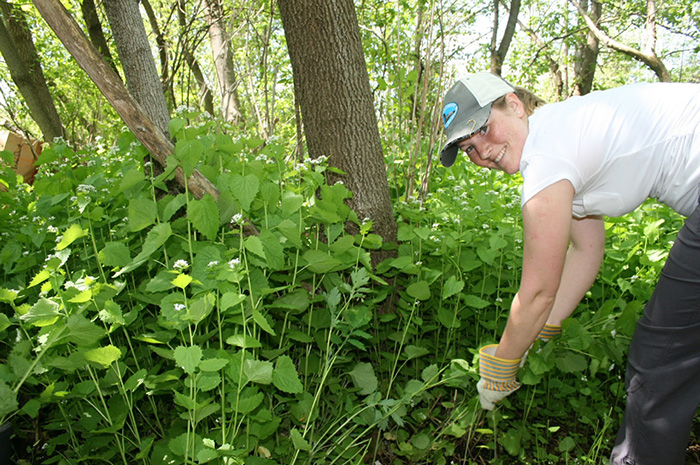
Terrestrial plants in a forest ecosystem can be trees, shrubs, or herbaceous plants that have been moved from their native habitat to an introduced area where they are able to reproduce quickly and crowd out native species.
Pathways
Pathways are routes by which an invasive species is transferred from one ecosystem to another. It is the physical means by which an invasive species is transported to a new region by humans, either deliberately or accidentally.
Programs
Many ecological, economic, and recreational impacts have been observed in North America due to the introduction of invading species. The OFAH/MNR Invading Species Awareness Program delivers a number of initiatives that promote public engagement in invasive species awareness and prevention across the province. The active participation of boaters, anglers, property owners, gardeners, recreationalists, and all Ontarians is vital to prevent the spread of invasive species. Our efforts today will benefit the ecosystems of tomorrow, as well as contribute to our continued enjoyment of our natural resources.
Volunteer involvement in raising invasive species awareness and prevention is appreciated and fundamental to the success of the Invading Species Awareness Program.
To learn more about how you can get involved, check out the different programs we offer, or call the Invading Species Hotline at 1-800-563-7711.
Clean, Drain, Dry
New regulations require users to ‘Clean’ and ‘Drain’ their watercraft and equipment after removing it from the water and transporting it across land. This includes pulling drain plugs and other devices to empty the watercraft, including draining live wells, and removing any animal or plant material from the watercraft or equipment. ISAP’s outreach efforts inform anglers of these regulations and explain why they are important practices that maintain healthy watersheds throughout Ontario.
Mysterysnail Management and Removal Program
Since 2021, the Invading Species Awareness Program has been working with the Coalition of Haliburton Property Owner’s Association (CHA) to address the increasing concern of mysterysnails in the Haliburton region. Both species of invasive mysterysnails, Chinese mysterysnail (Cipangopaludina chinensis) and banded mysterysnail (Viviparus georgianus) require a Licence to Collect Fish for Scientific Purposes to remove, ISAP works to provide agency to cottagers by bringing them under our licence.
Hit Squad
The Invading Species Hit Squad delivers on the ground, community-based invasive species education, awareness and monitoring initiatives. Working in partnership with MNR district offices, stewardship councils, conservation authorities, and non-governmental organizations, over 20 summer students are hired annually to attend local festivals and events, deliver educational programming to the public, and monitor local areas for invasive species.
Invading Species Reporting
The Invading Species Hotline serves as a valuable resource for the public, especially during times of increased public concern. Members of the public are able to call and speak with an invasive species expert to report a sighting or to inquire about invasive species information. The hotline number has been listed on numerous outreach materials created and distributed by the Invading Species Awareness Program. Think you’ve found an invasive species or want more information on invasive species?
Operation Bait Bucket
The Ministry of Natural Resources (MNR) will once again be conducting Operation Bait Bucket, a joint initiative between the ministry and the Ontario Federation of Anglers and Hunters (OFAH) under the Invading Species Awareness Program, in support of protecting Lake Simcoe’s aquatic resources.
Through the Operation Bait Bucket initiative, MNR crews from the Aurora District office visit and engage with ice anglers around Lake Simcoe to speak about maintaining the health of the lake and preventing the spread of invasive species.
Wild Pig Surveillance Program
In 2021, with support from the Green Shovels Collaborative as well as technical support from the Ministry of Natural Resources, the ISAP started the Wild Pig Surveillance Program (WPSP). This program has provided 50 engaged volunteers with surveillance kits to monitor for wild pig occurrences in key locations around Ontario. To date, the program has also reached over 300,000 people through social media and facilitated many wild pigs reports through our Invading Species Hotline.
Water Soldier Eradication
An inter-agency working group on water soldier was formed in 2008 to help coordinate research, monitoring, control and prevention strategies. Agency groups include: Ontario Ministry of Natural Resources, Ontario Federation of Anglers and Hunters, Ministry of the Environment, Conservation and Parks, Trent University, Lower Trent Conservation, and Parks Canada.
Think you have seen an invasive species?
Report it!
Invading Species Hotline
1-800-563-7711